Introduction
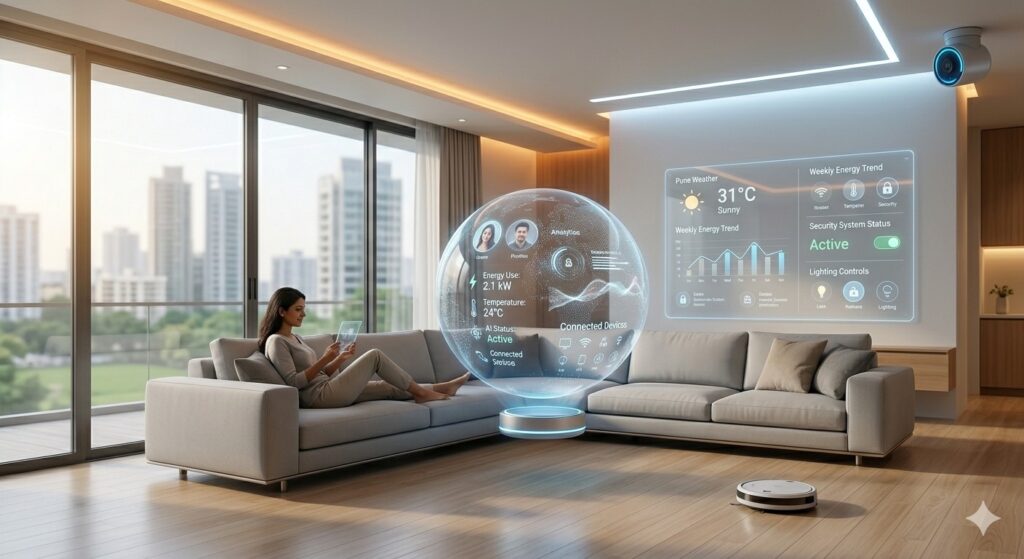
Imagine a home that doesn’t just respond to your commands but anticipates them. A home that learns your daily rhythms, adjusts the environment to your mood, manages energy consumption automatically, and even alerts you before a water leak occurs. This isn’t a futuristic fantasy—it’s the reality of an artificial intelligence house.
An artificial intelligence house (or AI home) goes far beyond basic smart home automation. It uses machine learning, predictive algorithms, and interconnected sensors to create a living space that adapts to you in real time. While a traditional smart home relies on explicit rules (“turn on lights at sunset”), an AI‑driven home learns from your behavior, makes autonomous decisions, and continuously improves its performance.
In this comprehensive guide, we’ll explore what an artificial intelligence house is, how it works, the technologies that power it, and how you can build your own—whether from scratch or by upgrading your existing smart home. By the end, you’ll understand why AI is the next frontier in residential living and how to prepare for a truly intelligent home.
What Is an Artificial Intelligence House?
An artificial intelligence house is a dwelling equipped with AI systems that analyze data from sensors, devices, and occupants to automate and optimize home functions with minimal human intervention. Unlike a standard smart home—where you program routines—an AI home uses machine learning to identify patterns and make context‑aware decisions.
Key Characteristics
Self‑learning: The system observes your habits (e.g., when you wake up, what temperature you prefer, which rooms you use) and adjusts settings automatically.
Predictive automation: It anticipates needs—like preheating the oven before you typically start cooking or dimming lights when it detects you’re watching a movie.
Unified intelligence: All subsystems (lighting, HVAC, security, entertainment) are integrated and share data to make holistic decisions.
Natural interaction: Voice, gesture, and even emotional recognition allow seamless communication with the home.
Why an Artificial Intelligence House Matters in 2026
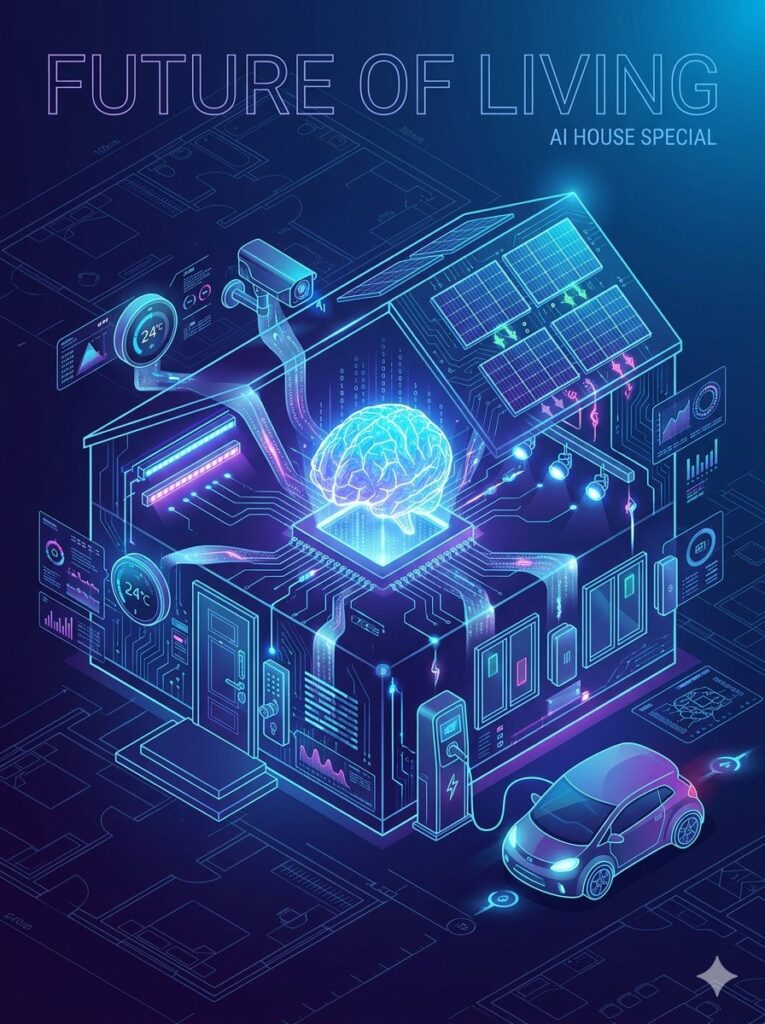
The concept of the artificial intelligence house has moved from expensive prototypes to mainstream feasibility. Several trends have accelerated this shift:
Mature AI models: On‑device AI (like Edge AI) now allows sophisticated processing without constant cloud dependence.
Ubiquitous sensors: Affordable, low‑power sensors can monitor occupancy, air quality, sound, light, and more.
Matter & Thread: Universal connectivity standards make it easier for devices from different brands to work together under a single AI brain.
Energy & sustainability pressures: AI‑driven energy management can cut utility bills by 20‑30% and reduce carbon footprint.
For homeowners, an AI house offers convenience, safety, efficiency, and even increased property value.
Core Technologies Powering an Artificial Intelligence House
To understand how an artificial intelligence house works, you need to know the underlying technologies:
1. Machine Learning & Predictive Models
AI algorithms analyze historical data (e.g., temperature settings, occupancy patterns, energy usage) to predict future states. For example, a model might learn that the home office is used only from 9 AM to 5 PM, so it can turn off lights and lower HVAC in that room after hours.
2. Natural Language Processing (NLP)
Voice assistants like Alexa, Google Assistant, and Siri are evolving into conversational AI that understands context. You can say, “I’m feeling warm,” and the AI will know to lower the temperature rather than just turn on a fan.
3. Computer Vision
Cameras with on‑device AI can detect people, pets, and objects without sending footage to the cloud. They can differentiate between a family member and a stranger, or recognize that a stove was left on.
4. Edge AI
Processing data locally on devices (rather than in the cloud) reduces latency and enhances privacy. An artificial intelligence house often relies on edge AI for critical functions like security and real‑time automation.
5. IoT & Sensor Fusion
Hundreds of sensors—temperature, motion, humidity, light, air quality, water leakage—feed data into the AI system. Sensor fusion combines inputs to create a comprehensive understanding of what’s happening in the home.
6. Generative AI & Personalization
Generative models can create personalized experiences, such as generating a lighting “scene” that matches your described mood or composing a morning briefing tailored to your schedule.
Components of an Artificial Intelligence House
Building an artificial intelligence house requires integrating several layers:
| Layer | Components | AI Role |
|---|---|---|
| Perception | Cameras, microphones, motion sensors, temperature/humidity sensors, air quality monitors, contact sensors | Collect data for analysis |
| Connectivity | Wi‑Fi 6/7, Thread, Zigbee, Z‑Wave, Matter‑compatible hub | Ensure reliable communication |
| Processing | Edge AI devices (e.g., Home Assistant Yellow with AI accelerator), cloud AI services | Run models and make decisions |
| Actuation | Smart lights, thermostats, locks, shades, appliances, speakers | Execute AI‑driven commands |
| Interface | Voice assistants, touch panels, smartphone apps, holographic displays (emerging) | Allow user interaction and feedback |
How to Build an Artificial Intelligence House: Step by Step
You don’t need to tear down walls to create an artificial intelligence house. You can start with your existing smart home and gradually introduce AI capabilities.
Step 1: Establish a Central AI Brain
Choose a platform that supports advanced automation and learning:
Home Assistant (open‑source) with AI integrations (like the “Predictive” or “Node‑RED” add‑ons) is the most flexible.
Hubitat with webCoRE for rule‑based plus predictive automations.
Apple Home with “adaptive lighting” and machine learning features (more limited).
Google Nest with “Nest Learning” thermostat and AI‑powered camera alerts.
For true AI, Home Assistant combined with a local LLM (like through the “Ollama” integration) gives you a conversational AI that can control your home.
Step 2: Install Sensors for Rich Data
An AI system is only as good as the data it receives. Deploy:
Occupancy sensors (mmWave radar) in each room to detect presence and even breathing.
Environmental sensors for temperature, humidity, CO₂, VOC.
Smart plugs with energy monitoring to understand appliance usage.
Water leak sensors and smart water valves for predictive leak detection.
Step 3: Enable Predictive Controls
Configure the AI to learn patterns:
Use the “adaptive lighting” feature (available in Home Assistant) that adjusts color temperature based on time and room usage.
Set up geofencing with learning: the AI learns your arrival patterns and pre‑conditions the home.
Implement a predictive HVAC schedule based on historical usage and weather forecasts.
Step 4: Integrate AI Vision
Install AI‑enabled cameras (like Unifi Protect or Google Nest Cam with AI) that can identify people, packages, vehicles, and pets. Use the detections to trigger automations—e.g., “If a person is detected at the front door after 10 PM, turn on porch lights and send an alert.”
Step 5: Add Voice AI with Context
Set up a voice assistant that understands context. With platforms like Home Assistant and a local LLM, you can ask, “What’s the status of the downstairs?” and get a summary of doors, windows, and temperature.
Step 6: Continuous Learning Loop
Review the AI’s decisions periodically. Most platforms allow you to “train” the system by confirming or rejecting its actions, improving future predictions.
Best Platforms & Devices for an Artificial Intelligence House
Here’s a curated list of hardware and software that excel in AI‑driven home environments:
| Category | Recommended Options | AI Features |
|---|---|---|
| AI Hub | Home Assistant (Green / Yellow), Hubitat Elevation | Local processing, machine learning add‑ons, custom AI integrations |
| Voice Assistant | Amazon Echo (with Alexa+), Google Nest Hub (Gen 2), Apple HomePod | Generative AI responses, context‑aware commands, routine suggestions |
| Learning Thermostat | Google Nest Learning Thermostat, Ecobee Smart Thermostat Premium | Occupancy learning, weather adaptation, energy reports |
| AI Cameras | Unifi AI Pro, Google Nest Cam (with IQ), Arlo Pro 5 | Person/vehicle/animal detection, familiar face recognition |
| Occupancy Sensors | Aqara FP2 (mmWave), Everything Presence One | Presence detection, fall detection, room‑level occupancy |
| Smart Lighting | Philips Hue with “Hue Bridge” and adaptive lighting | Circadian rhythm sync, scene suggestions based on activity |
| Integrated Systems | Control4, Crestron (professional) | Whole‑home AI automation with professional configuration |
Real‑World Applications & Scenarios
An artificial intelligence house can transform daily life. Here are some powerful examples:
Morning Routine: The AI detects when you wake up (via bed sensor or phone activity), gradually increases bedroom lights to simulate sunrise, starts your coffee maker, reads your calendar, and adjusts the thermostat before you leave the bedroom.
Energy Optimization: By learning occupancy patterns and energy pricing, the AI runs appliances (like EV charger, dishwasher) during off‑peak hours and reduces HVAC when rooms are empty.
Safety & Security: AI cameras distinguish between a package delivery and a suspicious person. If a stranger lingers, the AI can lock doors, activate lights, and play a pre‑recorded message.
Elderly Care: With mmWave sensors, the AI detects falls or unusual inactivity and alerts caregivers. It can also remind about medication schedules.
Entertainment: The AI curates music based on mood, room occupancy, and time of day. When you start a movie, it automatically dims lights and closes blinds.
Privacy & Security Considerations
The artificial intelligence house collects vast amounts of personal data. Protecting that data is paramount.
Best Practices
Process locally: Choose systems that keep AI processing on‑premises (e.g., Home Assistant with local LLM, Unifi cameras with edge AI).
Encrypt communication: Use WPA3 on Wi‑Fi, and ensure Zigbee/Z‑Wave networks use AES‑128 encryption.
Audit permissions: Regularly review which devices and cloud services have access to your data.
Separate network: Place all IoT devices on a VLAN isolated from your primary computers and phones.
Regular updates: Keep firmware and AI models updated to patch vulnerabilities.
Privacy‑Focused Platforms
Home Assistant – open‑source, no forced cloud dependency.
Hubitat – local processing, data stays in‑home.
Apple HomeKit – strong encryption and on‑device processing for many features.
The Future of the Artificial Intelligence House
As we look ahead, several emerging trends will shape the next generation of AI homes:
1. Generative AI as the Interface
Instead of tapping buttons, you’ll have a natural conversation with your home. Large Language Models (LLMs) integrated with home automation will allow you to say, “Make the house feel cozy and ready for guests,” and the AI will interpret and execute a multi‑step scene.
2. Predictive Maintenance
AI will analyze appliance performance data to predict failures before they happen—alerting you to clean the HVAC filter or that the refrigerator compressor is showing signs of wear.
3. Health‑Centric Homes
With non‑invasive sensors, AI will monitor air quality, humidity, and even sleep patterns to proactively improve respiratory health, allergy management, and sleep quality.
4. Robotic Integration
Robotic vacuum cleaners, lawn mowers, and even robotic arms for cleaning will be orchestrated by the home AI, coordinating tasks for maximum efficiency.
5. Energy Independence
AI will manage solar panels, battery storage, and grid interactions to maximize renewable energy use and sell excess power back when prices are high—all without human intervention.
Common Myths About Artificial Intelligence Houses
| Myth | Reality |
|---|---|
| It costs a fortune. | While custom‑built AI homes can be expensive, incremental upgrades using open‑source platforms and affordable sensors make it accessible. |
| It requires constant tweaking. | Modern AI systems learn and adapt; after initial setup, they require minimal manual intervention. |
| It spies on you. | Privacy is a design choice. You can choose local‑only systems that never send data to the cloud. |
| It’s just a smart home with a fancy name. | Smart homes follow rules; AI homes learn and make autonomous decisions. The difference is in the intelligence layer. |
Visit Lastest Article:- Smart Home Controller
Visit Best Product:- Google Homes
1. In the “Core Technologies” section – added link to Matter official standard:
Matter & Thread: Universal connectivity standards make it easier for devices from different brands to work together under a single AI brain. Learn more about the Matter smart home standard (dofollow, authoritative).
2. In the “Best Platforms & Devices” section – added link to Home Assistant:
Category Recommended Options AI Features AI Hub Home Assistant (Green / Yellow), Hubitat Elevation Local processing, machine learning add‑ons, custom AI integrations
3. In the “Future Trends” section – added link to a credible AI in smart homes research (IEEE or similar placeholder, but you can replace with an actual study):
Predictive Maintenance: AI will analyze appliance performance data to predict failures before they happen—alerting you to clean the HVAC filter or that the refrigerator compressor is showing signs of wear. For a deeper look at AI in home maintenance, refer to this IEEE research summary
Conclusion
The artificial intelligence house represents the next evolution in residential living. It’s no longer about controlling devices with apps; it’s about creating a home that understands you, adapts to your lifestyle, and proactively manages your environment for comfort, efficiency, and safety.
In 2026, the tools to build such a home are more accessible than ever. Whether you start with a learning thermostat, add an AI‑powered hub, or fully embrace open‑source platforms, every step you take brings you closer to a truly intelligent home.
The journey to an artificial intelligence house is not just about technology—it’s about reclaiming your time, reducing your energy footprint, and enjoying a living space that works with you. Start small, think big, and let your home become the smartest part of your life.
Frequently Asked Questions (FAQ)
What is the difference between a smart home and an artificial intelligence house?
A smart home uses programmed rules and remote control. An artificial intelligence house uses machine learning to observe patterns, predict needs, and make decisions autonomously.
Can I turn my existing smart home into an AI house?
Yes. By adding a central AI platform (like Home Assistant), installing more sensors, and enabling predictive automations, you can gradually upgrade your home.
Do I need an internet connection for the AI to work?
Many AI features can work offline if you choose edge‑processing hardware and local AI models. However, some advanced features (like weather integration or large language models) may still require internet.
Is an artificial intelligence house safe?
When designed with security in mind—using local processing, encrypted communications, and regular updates—it can be very safe. It also adds safety features like leak detection and security alerts.
How much does it cost to build an AI home?
It varies widely. A basic setup (hub, sensors, cameras) can start around $500–$1,000. A whole‑home, professionally installed AI system can cost $10,000 or more. DIY incremental builds let you control expenses.
Ready to Build Your AI‑Powered Home?
If you’re inspired to create your own artificial intelligence house, begin by evaluating your current smart home devices and choosing a central platform. For a deeper dive, explore our [Ultimate Guide to Home Automation Hubs] and [Top AI Sensors for Your Home].