Table of Contents
Introduction: Why an AI Smart Home Security System Is Important Today
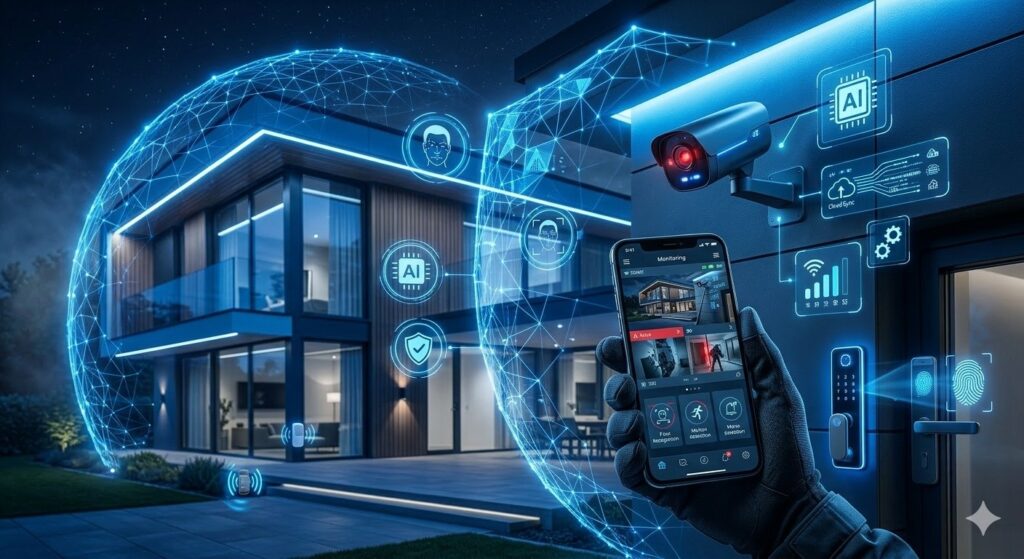
Home security has changed dramatically in the last few years. Traditional locks, alarms, and simple cameras are no longer enough to protect modern homes. Today, homeowners are turning to AI smart home security system setup solutions to create a safer and smarter living environment. Artificial intelligence allows security devices to analyze activity, recognize people, detect unusual behavior, and send instant alerts directly to your smartphone.
A properly designed AI smart home security system setup can monitor your house 24/7 without constant human supervision. AI-powered cameras can recognize faces, smart sensors detect suspicious movement, and intelligent automation can activate lights or alarms when unusual activity occurs. These systems not only improve safety but also provide peace of mind for homeowners who want to monitor their property from anywhere in the world.
Many beginners think installing an AI security system is complicated, but modern smart home technology makes the process surprisingly simple. Most devices connect through mobile apps and wireless networks, meaning you do not need complex wiring or professional installation. With the right approach, even beginners can complete an AI smart home security system setup within a few hours.
Companies like Google, Amazon, and Ring have made smart home devices easier than ever to install and control. Their systems integrate cameras, sensors, alarms, and voice assistants into one centralized platform that can be managed from a smartphone.
In this beginner guide, you will learn how to plan and complete an AI smart home security system setup step by step. We will cover choosing the right devices, installing cameras, connecting everything to a smart hub, enabling AI features, and testing the entire system. By the end of this guide, you will have a clear understanding of how to build a powerful AI security system that protects your home efficiently.
1. Choose the Right Devices for Your AI Smart Home Security System Setup
The first step in a successful AI smart home security system setup is selecting the right devices for your home. Smart security systems consist of multiple components that work together to monitor your property and detect potential threats. Choosing reliable devices ensures that your security system performs effectively and delivers accurate alerts.
One of the most important devices in any smart security system is the AI security camera. These cameras are designed to monitor areas such as entrances, driveways, and backyards. Modern AI cameras can recognize faces, detect unusual movement patterns, and differentiate between people, pets, and vehicles. This intelligent detection helps reduce false alarms and provides more meaningful alerts.
Another essential component is the smart door lock. Smart locks allow homeowners to control access remotely through a mobile app. Instead of using traditional keys, users can unlock doors with fingerprints, passcodes, or smartphone commands. This feature is especially useful for families, rental properties, or situations where temporary access needs to be granted to guests or service providers.
Motion sensors also play a key role in an AI smart home security system setup. These sensors detect movement in specific areas and trigger alerts when unusual activity occurs. AI-powered sensors can analyze motion patterns and ignore harmless movement such as pets walking around the house.
Smart doorbell cameras are another valuable addition. These devices allow homeowners to see who is at the door and communicate with visitors through two-way audio. Even when you are away from home, you can monitor deliveries, visitors, and suspicious activity.
Finally, smart alarm systems act as the central alert mechanism for your security setup. When sensors detect suspicious activity, the alarm system can activate sirens, send notifications, or even contact emergency services depending on the configuration.
Choosing compatible devices from trusted manufacturers ensures that your AI smart home security system setup works smoothly. Most modern devices are designed to connect easily through Wi-Fi and integrate with smart home ecosystems, making installation simple even for beginners.
2. Installing Smart Cameras in the Right Locations
Once you have selected your security devices, the next step in your AI smart home security system setup is installing smart cameras in strategic locations. Proper camera placement is critical because even the most advanced security camera cannot protect areas it cannot see.
The front door is the most important location for a smart camera. Most intruders or suspicious visitors approach a house through the main entrance, making this area a high priority for monitoring. Installing a camera above or near the front door allows you to capture clear footage of anyone entering or leaving your home.
The driveway is another important area to monitor. A camera facing the driveway can track vehicles arriving or leaving the property. This can help identify unknown vehicles or suspicious activity around your home. Many AI cameras can even detect license plates or recognize regular vehicles belonging to family members.
Backyards and side entrances are often overlooked but are common entry points for intruders. Installing cameras in these locations ensures complete coverage of your property. AI cameras with night vision are especially useful here because they can monitor dark areas effectively during nighttime hours.
Indoor cameras can also be part of your AI smart home security system setup, especially for monitoring living rooms, hallways, or areas containing valuable items. Indoor cameras help track unusual movement when nobody is home and provide additional layers of protection.
When installing cameras, it is important to consider height and angle. Cameras should be placed high enough to avoid tampering but angled correctly to capture faces and movement clearly. Many modern AI cameras include wide-angle lenses that cover large areas with minimal blind spots.
Proper placement ensures that your AI smart home security system setup can detect threats early and provide accurate visual evidence if suspicious activity occurs.
3. Connecting Devices to a Smart Home Hub
After installing cameras and sensors, the next step in completing your AI smart home security system setup is connecting all devices to a smart home hub or mobile app. The hub acts as the central control system that allows your security devices to communicate with each other.
A smart home hub connects cameras, sensors, locks, and alarms into one unified network. Instead of managing each device separately, homeowners can control everything from a single dashboard on their smartphone. This simplifies monitoring and allows quick responses to security alerts.
Many modern systems use smartphone apps as the primary control center. These apps allow users to view live camera feeds, receive notifications, lock doors remotely, and adjust automation settings. This level of control makes an AI smart home security system setup extremely convenient for everyday use.
Voice assistants can also be integrated into the system. Devices connected to smart assistants can respond to voice commands, allowing users to check camera feeds or lock doors using simple voice instructions.
Automation is another powerful feature of smart home hubs. For example, you can create rules that automatically turn on lights when motion is detected at night. Similarly, doors can lock automatically when everyone leaves the house, increasing overall security.
A well-configured hub ensures that your AI smart home security system setup works seamlessly and efficiently. All devices operate together as a coordinated system rather than independent components.
4. Enabling AI Features and Automation
The most powerful aspect of an AI smart home security system setup is the artificial intelligence that powers smart detection and automation. AI transforms basic security devices into intelligent systems that can analyze activity and respond automatically.
AI cameras use machine learning to recognize faces, identify known family members, and detect unfamiliar visitors. Instead of sending constant alerts for every movement, AI systems filter notifications and only alert homeowners when necessary. This reduces unnecessary alerts and ensures that important warnings are not ignored.
Smart motion detection is another valuable AI feature. Traditional motion sensors often trigger alarms when pets move or when objects shift slightly. AI sensors analyze patterns and distinguish between normal activity and potential threats.
Automation allows security devices to react instantly to specific situations. For example, if motion is detected outside at night, your system can automatically activate outdoor lights and start recording video. This type of automated response can deter intruders before they attempt to enter your property.
Another useful AI feature is remote monitoring. Through mobile apps, homeowners can check their security system anytime and from anywhere. This is especially helpful during vacations or long workdays when nobody is at home.
With AI enabled, your AI smart home security system setup becomes more than just a collection of devices. It becomes an intelligent security network that continuously learns and improves its ability to protect your home.
5. Set Up Smart Alerts and Notifications
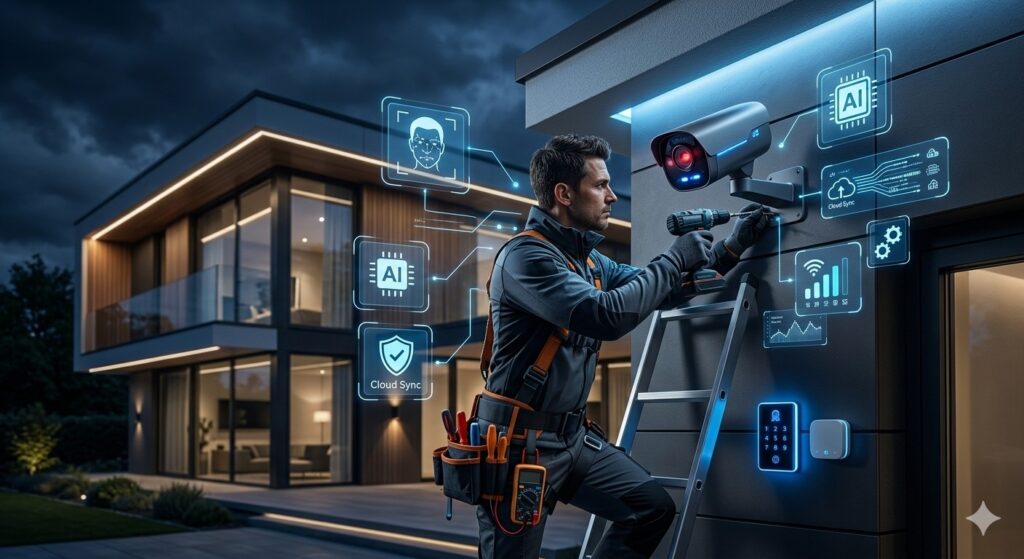
One of the most useful parts of an AI smart home security system setup is the ability to receive instant alerts and notifications. These alerts keep homeowners informed about everything happening around their property in real time. Instead of checking cameras constantly, the system automatically sends notifications when it detects important activity.
Smart alerts work through mobile apps connected to your security devices. Whenever a motion sensor detects movement or a security camera recognizes a person, the system sends a notification directly to your smartphone. This allows you to respond quickly if something unusual happens around your home.
AI technology makes these alerts smarter than traditional security systems. Older systems often triggered alarms for minor events such as animals moving or leaves blowing in the wind. However, modern AI-powered systems can analyze motion patterns and recognize the difference between a human, a pet, or a vehicle. This reduces false alarms and ensures you only receive alerts when something important occurs.
Another advantage of smart alerts is the ability to customize notifications. Homeowners can choose which events trigger alerts and which ones do not. For example, you may want notifications when someone approaches the front door but not when family members move inside the house.
Some systems also allow you to view live camera footage directly from the notification alert. This means you can immediately see what triggered the alert and decide whether any action is needed. If necessary, you can even communicate with visitors through two-way audio using your smartphone.
Setting up alerts correctly ensures that your AI smart home security system setup keeps you informed without overwhelming you with unnecessary notifications.
6. Test Your AI Smart Home Security System
After installing and configuring all devices, the next important step in your AI smart home security system setup is testing the entire system. Testing ensures that every component works correctly and that your home is fully protected.
Start by checking your smart security cameras. Open the mobile app and verify that each camera provides a clear live video feed. Make sure the cameras cover the correct areas and that there are no blind spots around entry points such as doors or windows.
Next, test the motion sensors by walking through the areas where they are installed. The system should detect movement and send an alert to your smartphone. This confirms that the sensors are functioning properly and that the alert system is working as expected.
You should also test smart door locks and alarms. Lock and unlock doors using the mobile app to confirm remote access works correctly. Trigger the alarm system briefly to ensure it activates and sends notifications.
Testing is important because it helps identify problems before a real security situation occurs. Sometimes sensors may need repositioning, or cameras may require angle adjustments to capture better views.
A complete test gives homeowners confidence that their AI smart home security system setup will perform reliably when needed. Regular testing every few months is also recommended to ensure that devices remain connected and fully operational.
7. Maintain and Upgrade Your Smart Home Security System
Completing your AI smart home security system setup is only the beginning. To keep your home protected in the long term, it is important to maintain and occasionally upgrade your security system.
Regular maintenance ensures that all devices continue working properly. Start by checking device batteries and replacing them when needed. Many wireless sensors and cameras rely on battery power, so keeping them charged or replaced is essential for uninterrupted protection.
Software updates are another important part of maintenance. Manufacturers frequently release updates that improve device performance, fix bugs, and enhance security features. Updating your devices ensures that your AI smart home security system setup remains secure against potential cyber threats.
Cleaning cameras is also recommended. Dust or dirt on camera lenses can reduce video quality and make it harder to identify people or objects. A simple wipe with a soft cloth can maintain clear footage.
As technology improves, homeowners may also consider upgrading certain devices. Newer AI security cameras often include improved facial recognition, better night vision, and more advanced motion detection. Adding additional sensors or cameras can also increase coverage and strengthen your security network.
Maintaining and upgrading your system ensures that your AI smart home security system setup continues providing reliable protection for years to come. A well-maintained smart security system not only improves safety but also adds convenience and peace of mind for modern homeowners.
Conclusion
Setting up a smart security system may seem complicated at first, but following the right steps makes the process manageable even for beginners. By selecting reliable devices, installing cameras strategically, connecting everything through a smart hub, and enabling AI features, you can complete an effective AI smart home security system setup that protects your property around the clock.
AI-powered security technology is transforming home protection by making systems smarter, faster, and more reliable. As smart homes continue to evolve, these systems will become even more advanced and easier to manage.
For homeowners who want safety, convenience, and peace of mind, investing in an AI smart home security system setup is one of the best decisions for modern living.
Visit Previous Article:- AI smart home security guide for beginners
Visit Good Products:- Google Homes
FAQs
1. What is an AI smart home security system setup?
An AI smart home security system setup is a modern home protection system that uses artificial intelligence to monitor and secure a house. It includes smart devices such as AI security cameras, motion sensors, smart locks, and alarms that work together to detect suspicious activity. These systems can recognize faces, send real-time alerts to smartphones, and automate security responses, making home protection smarter and more efficient.
2. Is an AI smart home security system easy to install for beginners?
Yes, most modern smart home security systems are designed for beginners. A typical AI smart home security system setup only requires connecting devices to Wi-Fi and installing a mobile app. Many devices are wireless and come with step-by-step instructions, making the installation process simple even without technical experience.
3. What devices are needed for an AI smart home security system?
A complete AI smart home security system setup usually includes smart security cameras, motion sensors, smart door locks, doorbell cameras, and a central hub or mobile app. These devices work together to monitor activity around the house and provide instant alerts if unusual behavior is detected.
4. Can I control my AI smart home security system remotely?
Yes, one of the biggest advantages of an AI smart home security system setup is remote control. Homeowners can monitor cameras, receive alerts, lock doors, and adjust settings directly from a smartphone app. This allows users to keep an eye on their home even when they are away.
5. Are AI smart home security systems safe and reliable?
Yes, modern AI smart home security system setup solutions are designed with strong security features such as encrypted connections, secure cloud storage, and user authentication. When properly configured, these systems provide reliable monitoring and significantly improve home safety.